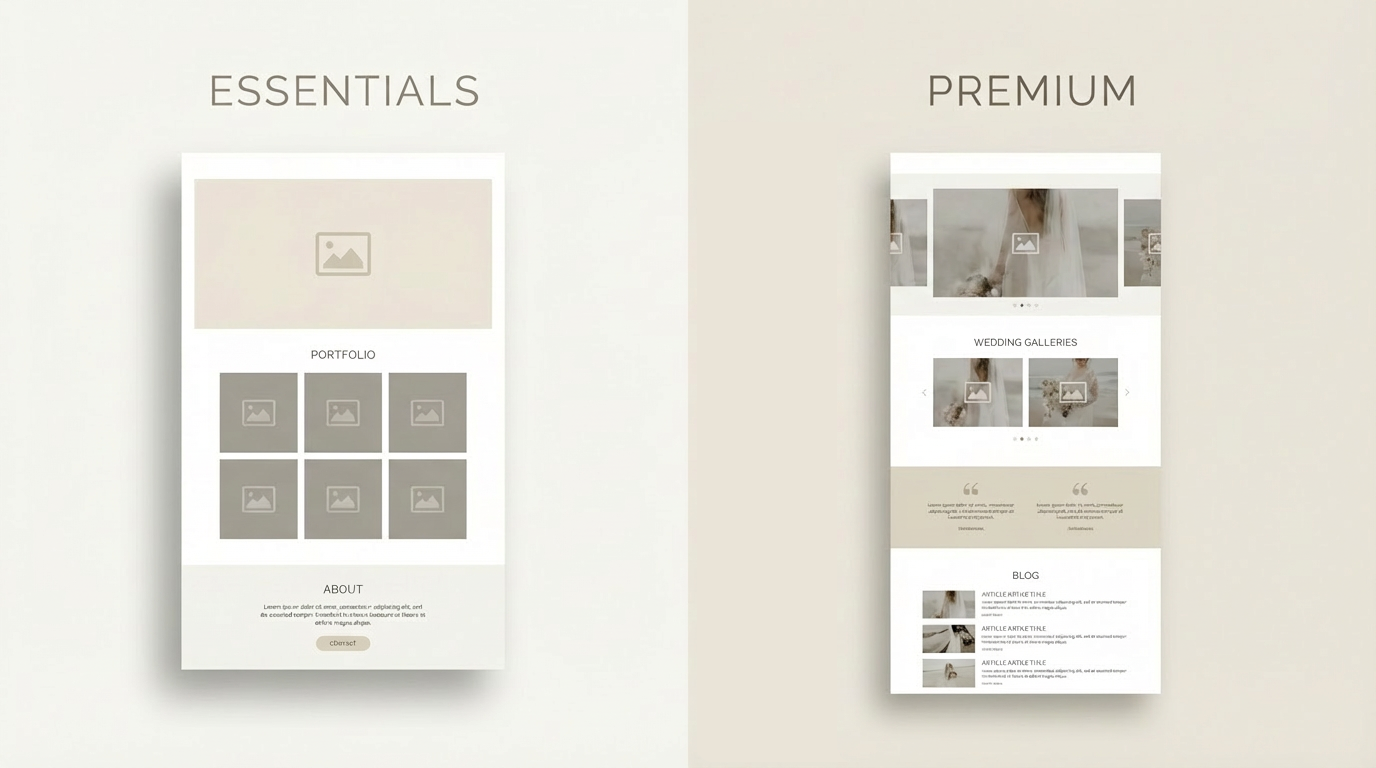
What a Photography Website Actually Needs (and When to Level It Up)
Most photographers do not need a premium website on day one. Start simple, publish fast, and level up only when it pays off.
If you are a photographer building or rebuilding your website, it is easy to feel overwhelmed.
Advice online often jumps straight to advanced SEO tactics, elaborate page structures, or expensive redesigns. The truth is simpler.
Not every photography business needs the same website.
What you need depends on where your business is today.
This guide breaks it down into two clear stages:
The bare minimum required to book real clients
The premium, high-end setup that supports scaling and higher pricing
Most photographers fall somewhere in between. That is completely normal.
The Bare Minimum: What Every Photography Website Must Have
This is the level where a website is doing its most important job:
building trust and generating inquiries.
If any of the items below are missing, couples often hesitate or move on.
1. A clear homepage
Your homepage should answer three questions immediately:
What do you do?
Where do you work?
Who is this for?
A strong hero image, a short value statement, and a clear call to action are enough.
You do not need animation, video, or complex layouts.
2. A focused portfolio
Couples want to see:
Your style
Your consistency
Your quality
A small, curated gallery often performs better than a large one.
Fifteen to thirty strong images is usually enough.
This is one of the most common requirements on vendor applications and preferred vendor lists across the wedding industry, including marketplaces like The Knot.
3. An About page with a human touch
Couples do not just book photos. They book people.
Your About page should include:
A short bio
A photo of you
Your approach or philosophy
It does not need to be long. It does need to feel genuine.
4. A simple contact or inquiry form
At minimum, couples should be able to:
Ask if you are available
Tell you their date and location
Reach you without friction
This is where many photographers lose inquiries without realizing it.
Platforms that focus on creative business workflows, like HoneyBook, consistently emphasize how much conversion depends on a clear and simple inquiry process.
5. Mobile-first performance
Most couples browse vendors on their phones.
If your site:
Loads slowly
Has tiny text
Requires pinching and zooming
you are losing leads.
Mobile friendliness is no longer optional.
What this level gives you
With just these elements, a photographer can:
Look professional
Build basic trust
Receive real inquiries
Book real clients
Thousands of photographers operate successfully at this level.
You are not behind if this is where you are.
The Professional Level: Where Growth Starts to Compound
Once you are booking consistently, the website shifts roles.
It stops being just a brochure and starts acting like a filter and educator.
Common additions at this stage
Testimonials or reviews
FAQ page
Multiple galleries by category
Clear explanation of your process
Blog posts featuring real weddings or sessions
These elements help couples self-qualify before reaching out.
CRM platforms like Dubsado regularly point to this stage as where lead quality improves and time spent on unqualified inquiries drops.
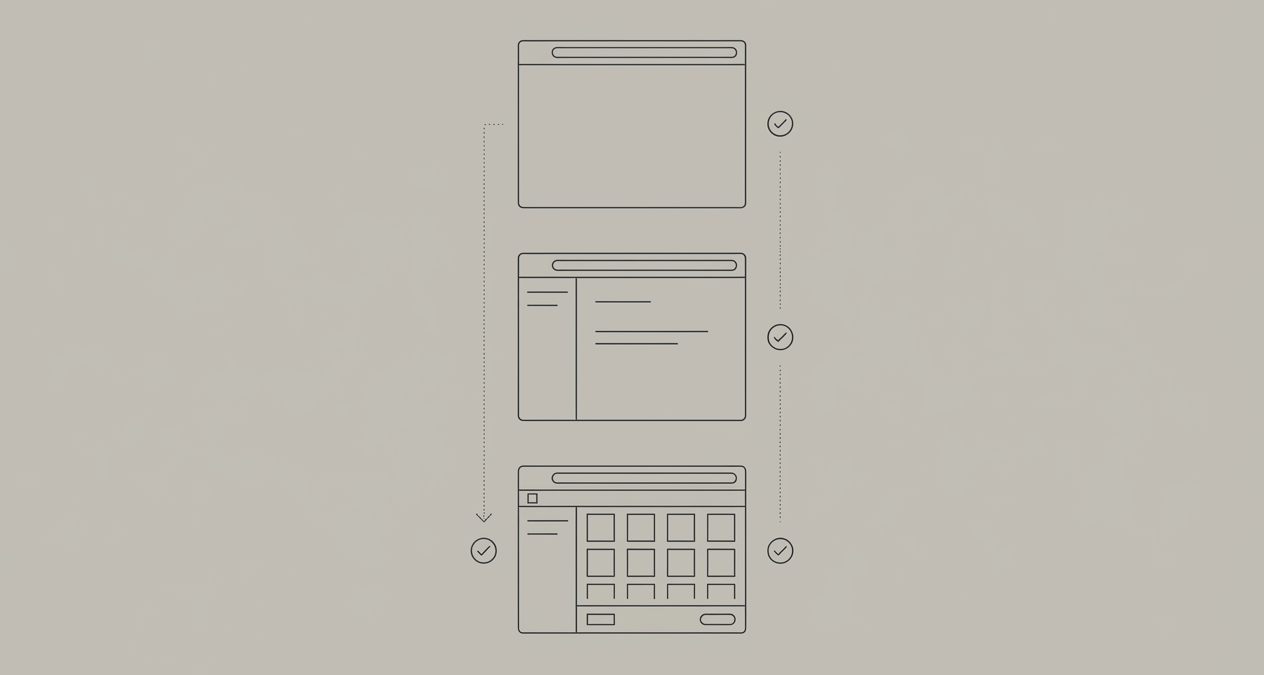
The Rolls-Royce Level: Built for Premium Brands
This level is not about looking fancy.
It is about leverage.
Photographers at this stage are usually:
Booked months in advance
Selective with inquiries
Charging premium rates
Their websites reflect that.
What changes at this level
Deeper storytelling
Instead of galleries alone, premium sites show:
Full wedding stories
Editorial-style copy
Context around the images
This positions the photographer as an experience, not a commodity.
Advanced lead qualification
Multi-step inquiry forms
Clear expectations around pricing and availability
Automated follow-ups tied to inquiries
This reduces back-and-forth and protects time.
Authority and visibility
Location or destination-specific pages
Press features or awards
Strong internal linking and SEO structure
At this point, the website actively supports growth rather than just presence.
What this level enables
Higher average booking value
Fewer but better inquiries
A brand that justifies its pricing without explanation
Not every photographer needs this.
Many choose it intentionally once demand is already there.
The most important thing to understand
A photography website is not a checklist competition.
It is a tool that should match the current maturity of your business.
Trying to build a Rolls-Royce website too early often causes:
Overwhelm
Delayed launches
Endless tweaking instead of booking
Starting with the bare minimum and upgrading intentionally is usually the faster path.
How this ties into VowSpace
VowSpace is built around this reality.
The platform is designed so that:
You can launch quickly with what actually matters
Your site grows as your business grows
Advanced features unlock when they are useful, not before
Whether you are just getting started or refining a premium brand, the goal is the same:
A website that supports your business, not one that distracts from it.
Tags
More planning help, minus the chaos
We share real wedding planning tips, tools, and inspiration on Instagram and Pinterest.